Most CBO advice is too neat. It treats Advantage Campaign Budget as the default upgrade from manual control, when in practice it's a selective tool. In the right account structure, it can lower friction and push spend into the best pockets of demand. In the wrong structure, it amplifies bad inputs faster than any human buyer could.
That tension matters more now because CBO isn't operating in isolation. Meta launched campaign budget optimization in 2017, and users can see up to 12% lower costs per purchase versus manual budgeting when the system can shift spend toward stronger ad sets, according to Strike Social's write-up on Advantage Campaign Budget. But the same system needs a 48 to 72 hour learning phase before budget starts tilting with confidence, which is why premature edits wreck so many otherwise solid campaigns.
The practical question isn't “Should I use CBO?” It's narrower. Use it where the algorithm has enough room, enough budget, and enough clean comparability to make better allocation decisions than you can manually. Don't use it where you still need controlled testing, strict market splits, or forensic clarity on what exactly caused a result.
Table of Contents
- Introduction When CBO Works and When It Burns Your Budget
- CBO vs ABO The Decision Framework for Scaled Accounts
- Architecting Your CBO Campaign for Algorithmic Success
- CBO Budgeting Scaling and Pacing by the Numbers
- The Hidden ROAS Killer How Advantage Plus Creative Sabotages CBO
- The CBO Power-Up Workflow Automation at Scale
- Conclusion From Budget Allocation to Algorithmic Partnership
Introduction When CBO Works and When It Burns Your Budget
CBO works when the account already has signal. It burns budget when buyers ask it to discover signal and allocate budget at the same time.
That's the mistake behind a lot of disappointing scale attempts. A buyer takes fresh audiences, unproven hooks, uneven audience sizes, and mixed intent levels, then hands all of it to one campaign-level budget. Meta does what it's designed to do. It chases the easiest early wins, over-weights the ad set with the strongest initial delivery path, and starves the rest before the test was ever fair.
Practical rule: If your main problem is “I don't know which audience or angle deserves spend,” CBO is usually the wrong first move.
Where CBO shines is the next stage. You already know which audiences belong in the same economic bucket. You've cleaned up overlaps. You've standardised the ad experience enough that budget shifts reflect audience response rather than random creative differences. Then campaign budget optimization becomes useful because it's solving an allocation problem, not a discovery problem.
The rest of the job is architecture, pacing, and restraint. Most poor CBO outcomes come from breaking one of those three.
CBO vs ABO The Decision Framework for Scaled Accounts
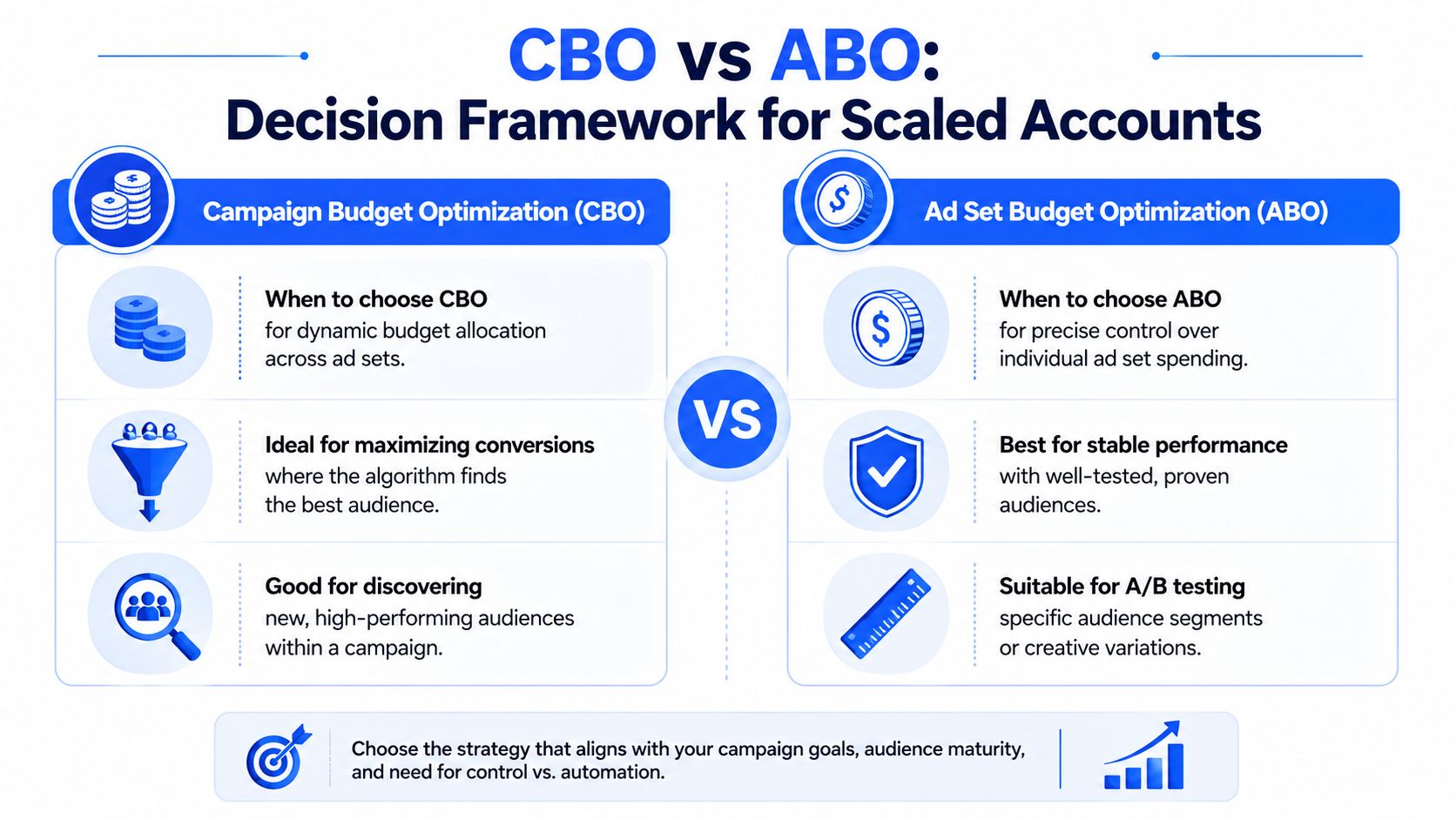
The cleanest way to think about CBO vs ABO is this. ABO is for controlled testing. CBO is for controlled scaling. People get in trouble when they reverse those jobs.
Use ABO when the question is discovery
If I'm testing distinct audiences, I want each ad set to earn delivery on its own budget. That's what ad set budgets are for. They let you isolate variables and stop Meta from making a premature judgment based on thin early data.
A common CBO failure is using it too early. The better sequence is to use ABO during testing to isolate distinct audiences and prevent impression overlap, then switch once there's enough data to reduce cost per result, as explained in Median Ads' breakdown of campaign budget optimization methodology.
Use ABO when you're dealing with cases like these:
- New audience hypotheses: broad vs LAL vs interest stack.
- Creative diagnostic work: same audience, different angle, where you need direct comparability.
- Geo control: separate markets where one country or state can't be allowed to siphon budget.
- Retargeting protection: warm and retargeting pools where forced budget control matters more than dynamic expansion.
Use CBO when the question is allocation
Once you've found ad sets that deserve more spend, CBO becomes the better operator. Now the algorithm isn't deciding which raw idea deserves a chance. It's deciding how to split budget among already-validated opportunities.
That distinction changes how you judge results. With ABO, you inspect ad-set-level economics closely because each set is intentionally budget-isolated. With CBO, ad-set-level cost reading becomes noisy because the system is reallocating dynamically inside the shell. You still review ad set behaviour, but the decision lens has to be campaign-first.
Here's the decision framework I use:
| Situation | Better tool | Why |
|---|---|---|
| Testing new audiences | ABO | You need enforced spend and clean comparison |
| Testing different funnel temperatures | ABO | Cold, warm, and retargeting shouldn't compete inside one CBO shell |
| Scaling proven audiences with same goal | CBO | Meta can reallocate faster than manual edits |
| Managing strict spend by region or business unit | ABO | CBO reduces control where hard caps matter |
| Consolidating similar ad sets after validation | CBO | You want efficiency, not rigid fairness |
A simple operator view
Experienced buyers usually need fewer rules, not more. These are the absolute requirements.
- Start with ABO if fairness matters: if each ad set must get a real testing chance, force it with ad set budgets.
- Graduate into CBO only after proof: move winners into one campaign once they share the same optimisation goal and comparable intent.
- Segment by temperature: don't put cold, warm, and retargeting audiences into one budget pool and expect clean economics.
- Judge CBO at campaign level: the budget engine is making portfolio decisions, not promising equal treatment.
Don't ask CBO to be a lab tool. It isn't one.
Architecting Your CBO Campaign for Algorithmic Success
Bad CBO performance usually starts in the build, not in the budget field. If the campaign is structured to make unlike things compete, Meta will still spend the money. It just won't spend it in a way you can trust.
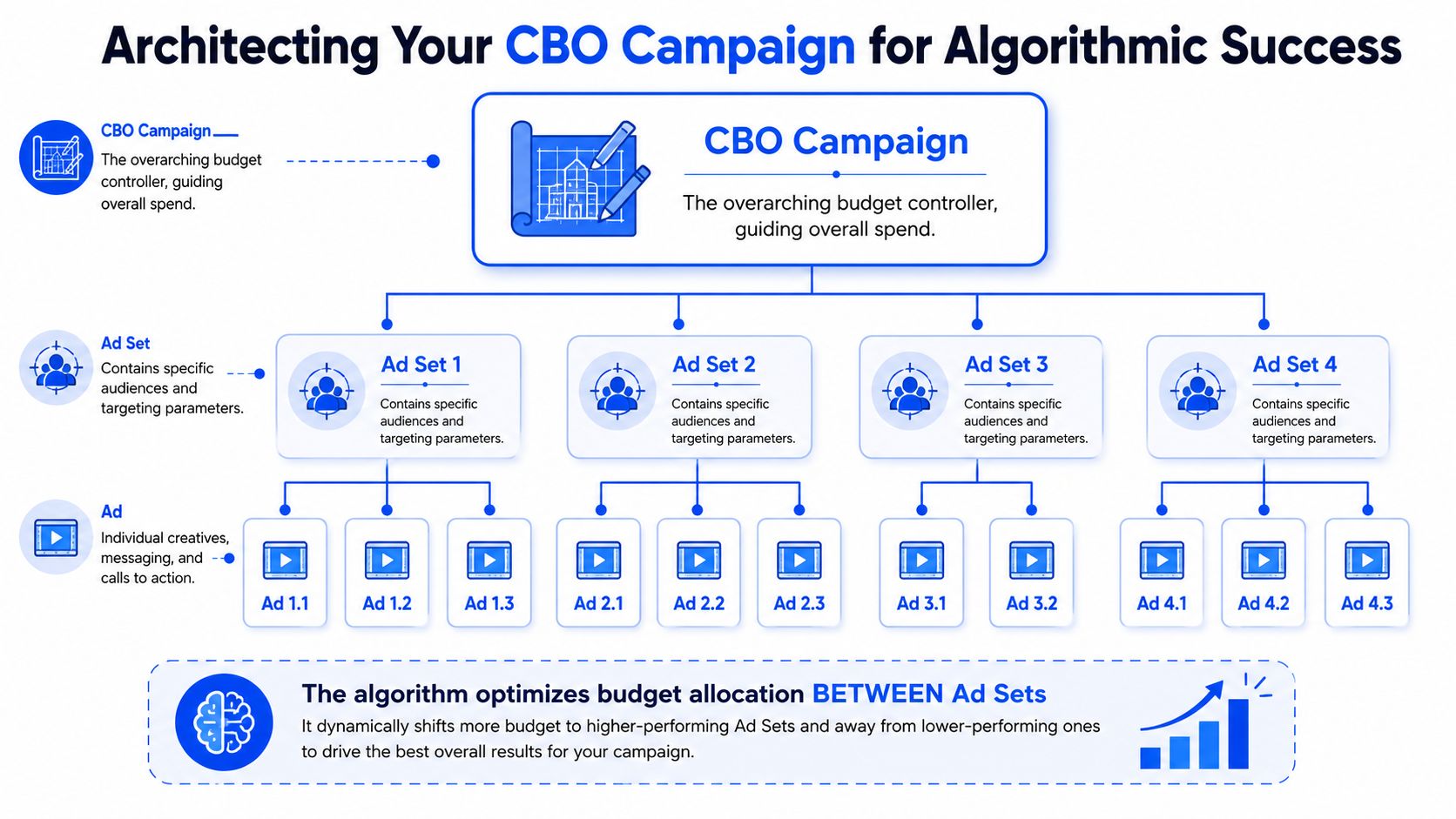
Build a campaign that gives Meta real choices
A usable CBO shell needs enough variation for the system to allocate, but not so much variation that the inputs are fundamentally different. I usually start with three to five ad sets, each built around the same optimisation event and the same bid logic. Dash Social's guide to setting up CBO in Ads Manager outlines the same setup pattern with campaign-level budgeting and supported bid strategies like Lowest Cost or Bid Cap.
The harder rule is comparability.
In practice, each ad set needs enough conversion volume to generate stable signals. I use 50 conversions per week as a working threshold, not because every account breaks at 49, but because delivery gets noticeably less reliable below that range. If a prospecting ad set will only produce a handful of purchases a week, it does not belong in the same CBO shell as a proven audience that can feed the algorithm steady data.
Audience shape matters just as much. If one ad set can address a massive broad pool and another is a narrow high-intent lookalike, the larger pool often absorbs spend faster, even when the smaller pool is strategically more valuable. That is one of the hidden reasons buyers think CBO is "picking winners" too early. Often it is reacting to scale and signal density, not making a clean efficiency judgment.
A cleaner structure looks like this:
- Same funnel stage: keep cold prospecting separate from warm traffic and retargeting.
- Similar audience scale: put broad audiences with broad audiences, and tighter lookalikes with their peers.
- One optimisation event: purchases with purchases, leads with leads.
- One bidding philosophy: Lowest Cost and Bid Cap can both work, but mixing conflicting constraints creates noise.
That last point gets missed. CBO works best when ad sets are competing on a narrow set of variables. If one set is broad, another is retargeting, a third uses a different event, and a fourth has a tighter bid constraint, the campaign is not giving Meta a portfolio to optimize. It is giving Meta a pile of unrelated instructions.
Standardise creative inputs before you judge budget allocation
This is the part many CBO tutorials gloss over, and it is where a lot of ROAS drift starts.
If one ad set uses polished UGC video and another uses static product tiles, budget allocation is no longer telling you much about audience strength alone. It is blending audience response with creative-format bias. Then buyers look at spend movement and assume the audience lost. Sometimes the audience was fine. The creative package was different enough that Meta had no clean way to compare the sets.
I want creative parity at launch. Same format family, similar offer framing, similar hook angle, and consistent naming. Then spend concentration means something.
This matters even more if Advantage+ creative enhancements are active. Advantage Campaign Budget is already reallocating spend at the campaign level. If Meta is also changing text treatment, image crop, or visual presentation inside ads, you introduce a second optimization layer that can distort the read. That conflict is a major reason scaled accounts see unexplained ROAS drift after a campaign looked stable on paper.
The fix is operational discipline. Keep the creative variables as controlled as possible during the first learning window, then expand deliberately. If the account needs faster iteration across many ad sets, tools like Rapid Ads help by reducing the setup drag that usually causes inconsistent naming, mismatched formats, and uneven creative distribution across the shell.
Clean CBO structure is not just budget architecture. It is input control.
The setup path inside Ads Manager
The Ads Manager path is straightforward. The mistakes happen when buyers rush through it and combine too many variables in one shell.
- Create a new campaign and choose the objective that matches the conversion action you want.
- Turn on Advantage Campaign Budget at the campaign level.
- Set a Daily or Lifetime budget based on how tightly you need to control pacing.
- Choose the bid strategy before building ad sets. Lowest Cost is usually the cleanest starting point unless margin limits require tighter control.
- Build three to five comparable ad sets with similar intent, similar scale, and the same optimization event.
- Load multiple ads per ad set using parallel creative types, not random format mixes.
- Review Advantage+ creative settings before publishing so you know whether spend shifts are coming from audience performance, creative enhancements, or both.
A naming pattern should make the structure obvious without opening each level of the campaign. Something like CBO_US_Prospecting_Broad_LC_Video01 is enough to tell an operator the market, stage, audience type, bid logic, and creative family in a few seconds.
If that naming standard sounds overly strict, it usually means the account has already grown past the point where manual memory is reliable. That is also where workflow tooling starts to matter. Once a team is scaling CBO across markets, offers, and creative batches, execution quality becomes part of performance.
CBO Budgeting Scaling and Pacing by the Numbers
CBO does not reward symmetry. It rewards signal density.
That matters because a lot of buyers still expect each ad set to get a fair test. Meta is trying to find the cheapest path to the optimization event, not give every audience equal airtime. According to The Optimizer's explanation of budget sharing and Meta allocation behaviour, a single ad set can absorb most of the campaign budget if performance separates early. That is normal CBO behaviour, not a delivery bug.
The budgeting question is simple. Can this campaign buy enough conversion signal to let the system make a useful decision?
A practical benchmark is to budget around your expected cost per result, then ask how many daily results the full campaign can realistically produce. If your target CPA is $25 and the campaign budget is $200 per day, you are buying room for roughly eight conversions across the shell, not across each ad set. Split that across four ad sets and the margin for error gets tight fast. One weak audience, one slow day, or one creative mismatch can starve the rest of the campaign before the allocation settles.
That is why underfunded CBOs usually show the same symptoms:
- Too many ad sets for the available budget: spend gets diluted before any audience produces stable conversion data.
- CPA targets that do not match shell size: the campaign cannot purchase enough optimization events to learn with confidence.
- Too much variation packed into one campaign: broad audiences, narrow retargeting, and unrelated creative angles force the budget engine to compare unlike variables.
Inside Ads Manager, the pacing decision starts at the campaign level. Open the campaign, go to Campaign settings, review Advantage Campaign Budget, then compare the daily budget against your recent account CPA or cost per purchase. If the math only supports a handful of total conversions per day, do not expect clean CBO reads. Increase budget, reduce ad set count, or move back to ABO until the account can support consolidated testing.
How to scale without resetting the learning pattern
Profitable CBO campaigns usually break during scale because the buyer changes budget faster than the account can absorb new inventory.
A safer operating rule is straightforward. Keep budget increases moderate, then wait long enough to judge post-change efficiency on actual conversion volume. Evok's budget optimisation framework for limited resources supports the same principle: avoid aggressive budget swings and judge changes over a meaningful sample, not a few hours of spend. In practice, many experienced Meta buyers use staged increases in the 20% to 30% range, then give the campaign several days to settle before the next move. The exact percentage matters less than consistency.
Here is the trade-off. Smaller increases protect stability but slow revenue growth. Larger increases can accelerate spend, but they also widen CPA variance and often shift delivery into weaker pockets of inventory. On accounts with thin margins, I would rather miss two days of upside than force a relearn and spend a week repairing CPA.
A simple pacing framework works well:
- Increase budget by 20% to 30% when CPA is inside target and conversion rate is stable.
- Hold for at least 72 hours unless spend is very low and the account needs more time to generate enough results.
- Pause scaling if CPA jumps hard for two consecutive days without a matching rise in average order value or lead quality.
- Use larger jumps only when the campaign already has excess conversion volume and broad audience coverage.
What to monitor after each budget change
Do not judge a scale decision on spend alone. Read the full pattern.
- Cost per result: compare it to your acceptable margin, not just yesterday's number.
- Conversion rate: if clicks rise but conversion rate drops, the campaign is buying lower-intent traffic.
- CTR and outbound click quality: higher spend with weaker engagement often means creative fatigue or inventory expansion.
- Frequency across several days: rising frequency with weaker returns usually means the campaign is pushing too hard into the same reachable users.
- Spend concentration by ad set: if one ad set takes most of the delivery, check whether it is a real winner or just getting help from a creative configuration the rest of the campaign does not share.
That last point gets missed all the time. Buyers blame CBO for unstable ROAS, but the budget engine is often reacting to creative inputs that changed underneath it. If one ad set has Advantage+ creative enhancements helping delivery and another does not, the campaign-level budget read is already contaminated. That is where many scaling decisions go wrong, and it is why CBO management without creative control drifts faster than most tutorials admit.
The Hidden ROAS Killer How Advantage Plus Creative Sabotages CBO
A lot of “mystery CBO drift” isn't budget drift at all. It's creative drift.
Why this conflict creates bad decision signals
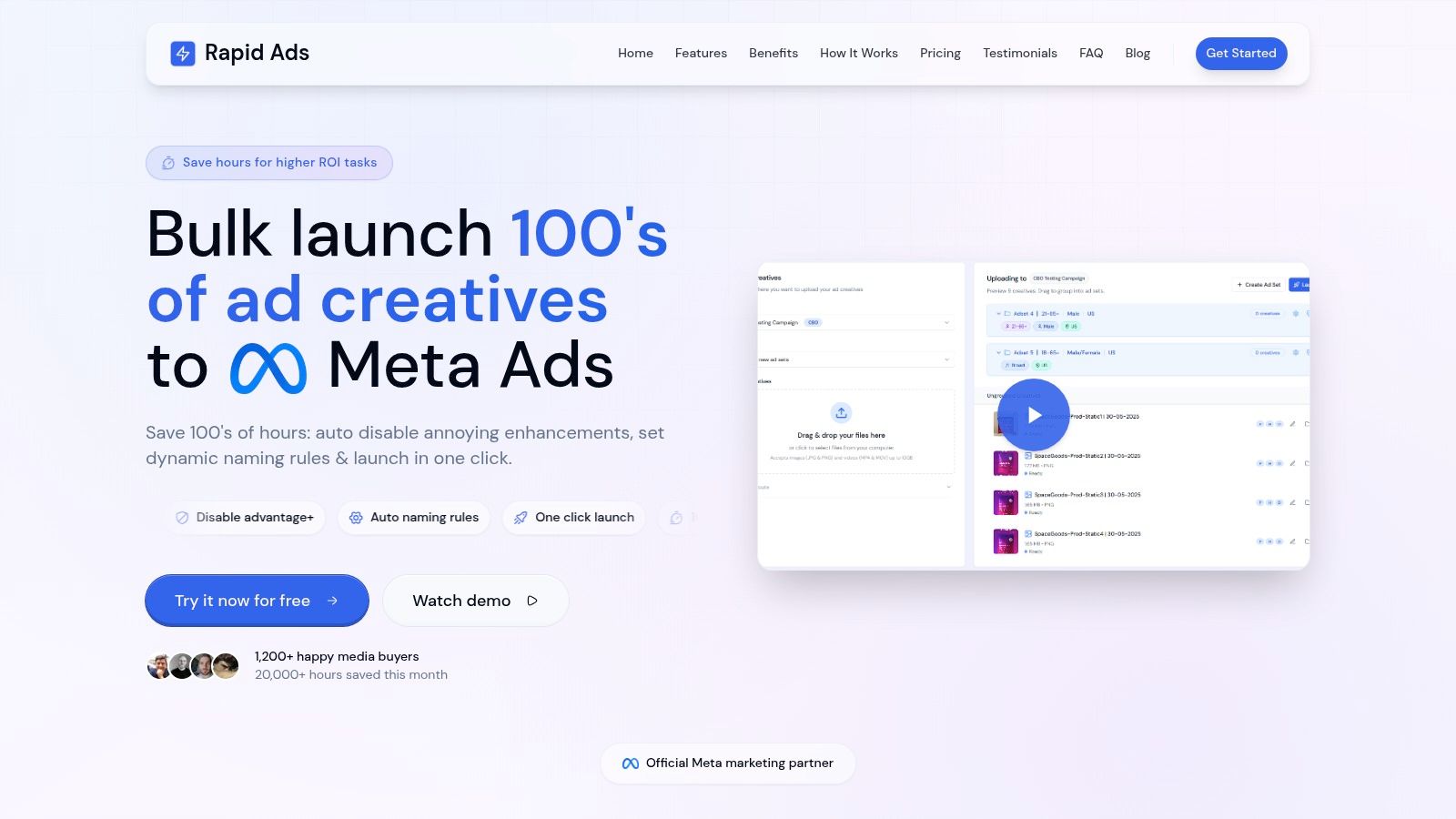
CBO is supposed to allocate budget based on performance. That logic gets contaminated when Meta's Advantage+ creative enhancements start modifying the ad experience in ways the buyer didn't intend. Auto-cropping, text adjustments, and similar enhancements can change how one ad set performs relative to another, even when you thought you launched standardised creative.
That's why the CBO read becomes unreliable. You think the algorithm prefers Audience A over Audience B. In reality, the platform may have changed the rendered creative in ways that helped one set and hurt another. The budget engine then optimises on top of that unstable input.
The issue is widespread enough that surveys of over 1,200 media buyers found 68% report unexplained spend shifts and ROAS drift in CBO campaigns, often linked to these auto-enabled Advantage+ creative enhancements. The same industry context notes that tools built specifically to auto-disable those features exist because manual control is fragile.
Where the problem shows up in the workflow
Inside Ads Manager, these toggles are easy to miss, especially when you're launching at speed or duplicating existing structures. A buyer can do all the hard strategic work correctly, then lose control during production because the platform re-enables settings that alter creative delivery.
That creates three operational problems:
- Broken comparability: ad sets no longer run the same creative conditions.
- Messy diagnosis: you can't tell whether audience, message, or enhancement layer caused the result.
- False scaling decisions: CBO may reward an ad set for a presentation change you never meant to test.
The fix isn't conceptual. It's procedural. You need a launch process that checks and preserves creative settings every time, especially when bulk publishing across multiple ad sets and accounts.
When CBO and Advantage+ creative are both active, you're running two optimisation systems at once. If you don't control the second one, the first one becomes harder to trust.
The practical takeaway is simple. Protect the integrity of your inputs before you blame the budget engine.
The CBO Power-Up Workflow Automation at Scale
The strategic part of CBO is hard. The mechanical part shouldn't be.
The operational bottleneck isn't strategy
Scaled accounts break down in the handoff between planning and launch. A buyer knows they need consistent ad sets, clear naming, standardised creatives, and clean segmentation. Then they open Ads Manager and lose time to repetitive setup, duplicated errors, and hidden defaults.
That's why workflow matters more than most media teams admit. If you're launching multiple CBO shells across several ad accounts, manual build steps create inconsistency fast. Naming drifts. Creative variants land in the wrong places. Warm and cold structures get cloned sloppily. Settings you meant to disable come back on.
A better operating model uses one repeatable production layer for:
- Bulk creative uploads: get image and video variations into the shell without one-by-one setup.
- Naming enforcement: keep ad set and ad names structured so reporting stays readable.
- Multi-account management: replicate the same CBO architecture across clients or brands without rebuilding from scratch.
- Creative setting control: preserve the exact ad conditions you intended to test.
A dedicated launch workflow helps more than another reporting view. If the build process is clean, the analysis later is cleaner too.
The checklist I'd enforce across accounts
For teams managing CBO at scale, I'd standardise the workflow like this:
- Validate winners in ABO first. Don't promote unproven ad sets into a campaign-level budget pool.
- Clone only comparable ad sets into the CBO shell. Same intent, same objective, similar audience scale.
- Use fixed naming syntax. Campaign, market, funnel stage, audience type, and creative family should all be visible in the name.
- Upload creative variants in batches. Reduce manual mismatch between ad sets.
- Lock down enhancement settings before publish. If your process can't guarantee this, your CBO read won't stay clean.
- Manage account duplication centrally. Winning structures should move fast across accounts without introducing setup drift.
At that point, campaign budget optimization stops feeling like a black box. It becomes a controlled system with predictable inputs, readable outputs, and far less production waste.
Conclusion From Budget Allocation to Algorithmic Partnership
CBO pays off when the buyer stops treating budget allocation as the main job. The harder job, and the one that protects ROAS, is deciding which variables the algorithm is allowed to touch and which ones stay fixed.
That is the part many Meta accounts still get wrong. Budget is handed to Advantage Campaign Budget, creative is handed to Advantage+ enhancements, and the buyer is left reading blended output that looks efficient until performance drifts. The real skill is not giving Meta less control across the board. It is drawing a clean line between optimization and mutation.
That mindset changes how scaled accounts should be run. A good CBO setup is not just a campaign structure. It is an operating system for repeatable decisions. Buyers who keep winning with CBO tend to do three things well: they define stable inputs, they audit hidden automation, and they remove production friction that causes setup drift between accounts.
That last point matters more than many teams admit.
At scale, the limiting factor usually is not whether CBO can find the best ad set. It is whether the team can launch, clone, name, QA, and preserve settings fast enough to give the algorithm a fair environment. That is why workflow tools matter. Not because they save a few clicks, but because they reduce the human error that creates fake performance signals.
If I had to leave one rule for advanced buyers, it would be this: trust Meta with allocation only after you have earned the right to trust the read. If budget automation and creative automation are both running unchecked, you are not partnering with the algorithm. You are grading a test while the questions keep changing.
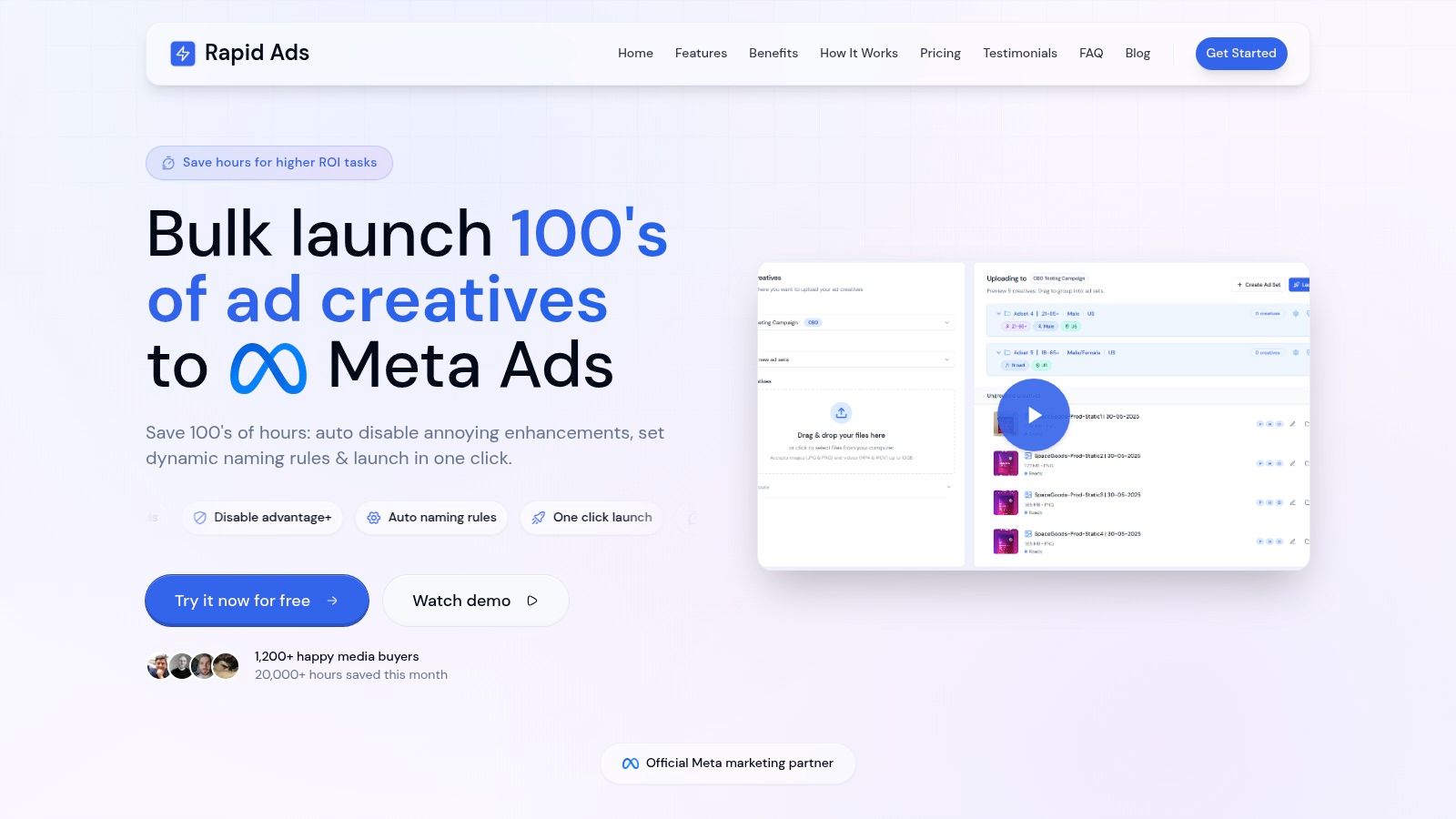
If you're building Meta campaigns at scale and you're tired of Ads Manager slowing down clean CBO execution, Rapid Ads is worth a look. It solves the practical bottlenecks that distort campaign budget optimization in actual operation: bulk uploading creatives, enforcing naming conventions, managing multiple ad accounts from one dashboard, and keeping Advantage+ creative enhancements disabled so your testing conditions stay intact.