A higher CTR doesn't automatically mean better Meta copy. A curiosity hook can win the click while producing weak landing-page engagement, poor CVR, expensive CPA, or low-quality leads. Meta Ads Manager may report a creative as a winner because it generates cheap traffic, while your CRM, checkout data, or revenue report tells a different story.
The useful unit isn't the clever line. It's a testing system that connects audience temperature, funnel stage, placement, primary text, headline, CTA, naming convention, UTM structure, and downstream KPIs. The question isn't just which ad gets attention. It's which message creates valuable action for a defined audience under a controlled delivery setup.
The ad copy best practices below assume you already understand ROAS, CPA, CTR, CBO, ABO, LALs, and retargeting. You'll get practical formulas, side-by-side variants, Ads Manager workflows, testing controls, and reusable structures for scaling copy across Meta accounts. The aim is to turn copy angles into operational inputs that media buyers can compare, document, and redeploy.
Table of Contents
- 1. Specificity Over Generalization With Numeric Claims and Quantified Results
- 2. Pattern Interrupts With Unconventional Formatting and Capitalization
- 3. Curiosity Gaps and Open Loops Withheld Information Strategy
- 4. Social Proof Anchors With Real Numbers, Reviews, and Attribution
- 5. Negative Trigger Statements That Lead With Pain Points
- 6. Micro-Commitment Language That Creates a Small Yes Before a Big Yes
- 7. Scarcity and Urgency Anchors With Time Limits, Stock Counts, and Exclusivity
- 8. Direct-Response Call-to-Action Language With Command Verbs
- 9. Audience-Specific Language and Segmentation by Buyer Persona
- 10. Operational Workflows and Rapid Ads Best Practices
- 10-Point Ad Copy Best Practices Comparison
- Turn Copy Angles Into a Repeatable Testing Loop
1. Specificity Over Generalization With Numeric Claims and Quantified Results
Vague copy creates vague test hypotheses. “Save time” could refer to minutes, hours, or an entire workflow. “Affordable” depends on the buyer's reference point. A quantified claim gives the audience a clearer promise and gives the performance team a more precise variable to test.
A practical formula is:
Outcome + measurement + time frame + audience context
Compare:
- “Save time with automated workout tracking”
- “Save 8 hours per week with automated workout tracking”
The second version creates a measurable expectation. The long-running principle that numbers, prices, statistics, and percentage discounts can make ad copy feel more credible is discussed in HubSpot's search ad copy guide, which also cites a Meta/Facebook test where a small wording change increased CTR by 0.38 percentage points.
Build claims that survive reporting
The number in the ad should map to a metric your team can defend. If the claim is “Save 8 hours per week,” define whether that means average reported time saved, measured workflow time, or a modeled estimate. Don't insert a number merely because it looks persuasive. An unsupported claim can lift attention while creating compliance, refund, or sales-enablement problems downstream.
Examples from familiar positioning patterns show the difference:
- “Save 8 hours per week with automated workout tracking” versus “Save time.”
- “4.2M+ businesses powered by Shopify” versus “Trusted by businesses.”
- “$1 + $2 shipping” versus “Affordable razors.”
The same principle applies when you create conservative, mid, and aggressive claim tiers. Keep the product, audience, funnel stage, and time frame constant, then test claim strength rather than changing the entire message.
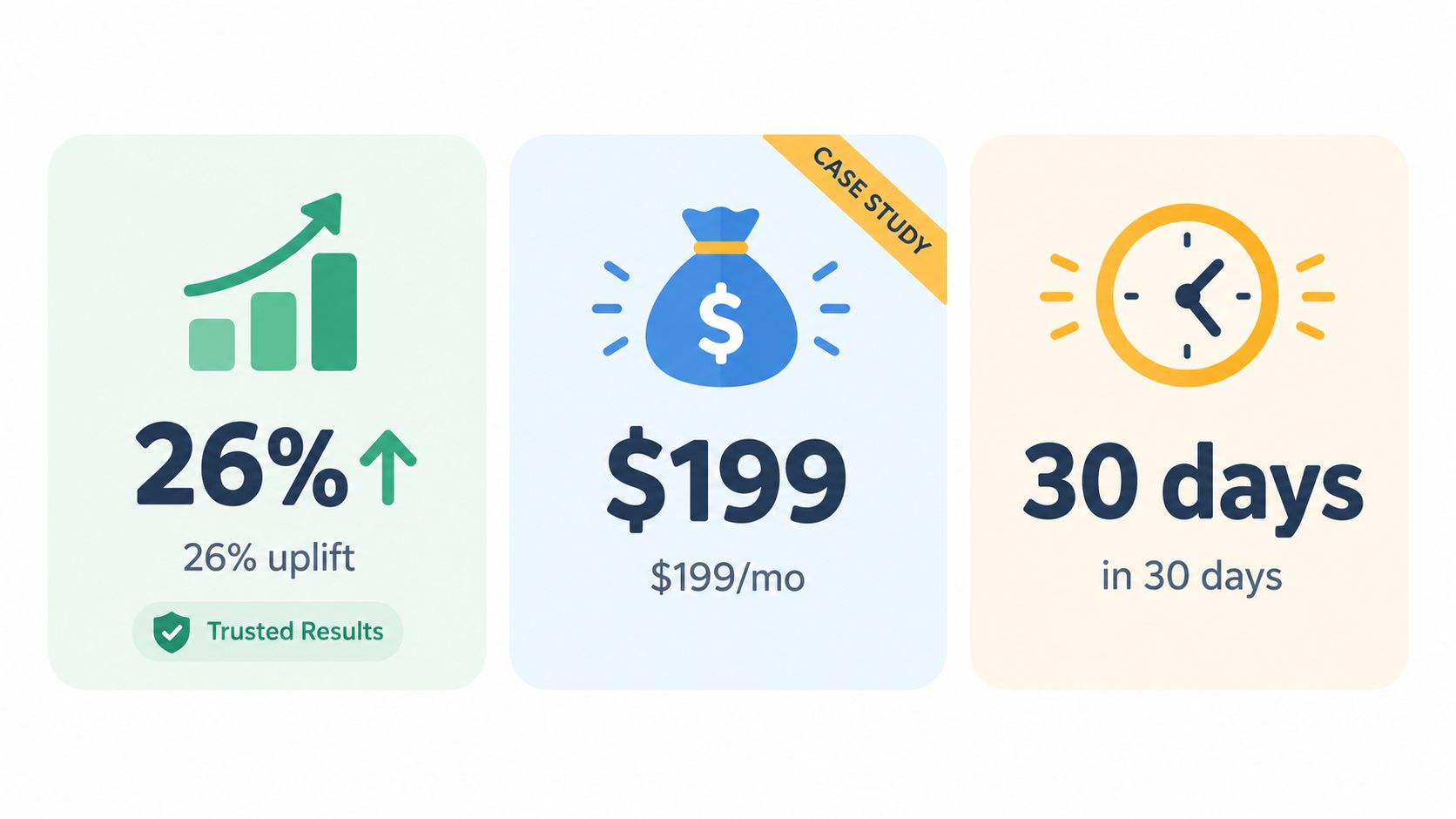
For scaled production, store each claim in a master CSV with fields for claim text, source metric, time frame, region, audience, and risk tier. Rapid Ads can use a separate numeric-claim column during bulk CSV uploads, making it easier to compare claim tiers without rewriting every creative manually.
2. Pattern Interrupts With Unconventional Formatting and Capitalization
Pattern interrupts matter because users scan feeds rather than process every word. One industry source summarized in this ad copy best-practices guide says 8 out of 10 people read headline copy, while only 2 out of 10 continue to the rest of the text. That makes the visible opening a valuable testing surface, but formatting alone can't compensate for a weak offer or poor message match.
Use formatting to separate ideas, not to disguise them. A controlled pattern-interrupt test might compare:
Control
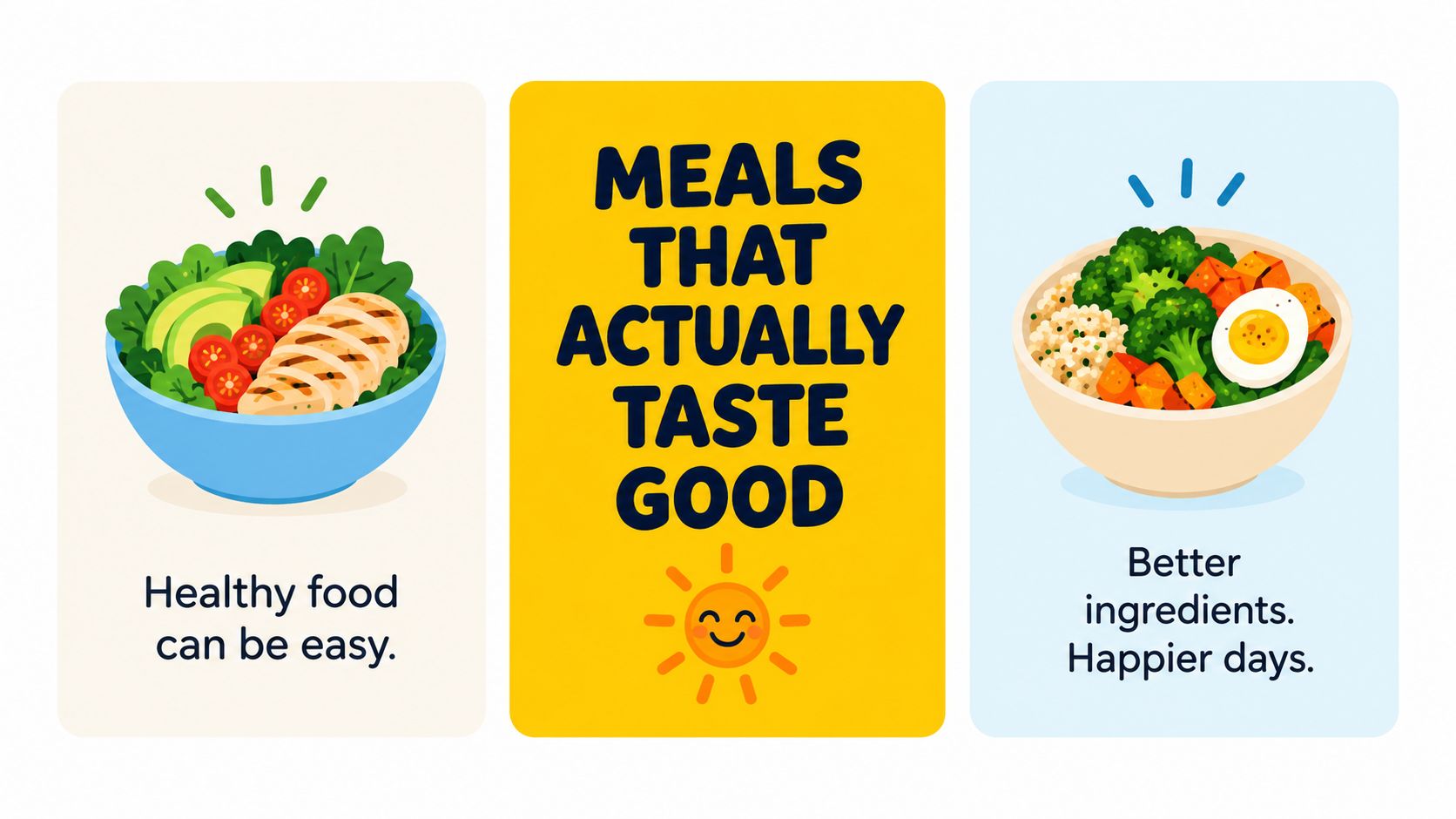
Easy meals for busy weeknights. Get fresh ingredients and simple recipes delivered to your door.
Variant
MEALS THAT ACTUALLY TASTE GOOD
Prep time: 30 mins or less
Cook tonight.
The second version creates stronger visual rhythm through capitalisation and line breaks. HelloFresh-style formatting, Glossier's conversational sunscreen hook with an emoji, and Nike's slash-based “Just Do It” structure all demonstrate different ways brands can create recognisable pauses without using the same device in every ad.
Keep the interruption testable
Don't change capitalisation, emoji placement, sentence length, creative format, and CTA in one cell. Use a template with separate blocks:
- Opening: benefit, question, or problem.
- Subheader: proof, constraint, or differentiator.
- CTA: one next action.
Then test the opening format against a plain-text control. Reserve ALL CAPS for a short phrase, use line breaks to separate a benefit stack, and compare leading versus trailing emoji placement when the brand voice supports it.
A pattern interrupt can also become a quality problem. If special characters make the ad look spammy or trigger platform quality concerns, simplify the treatment. For additional context on how symbols can function in advertising, see this guide to using symbols effectively in ads.
3. Curiosity Gaps and Open Loops Withheld Information Strategy
“Improve your ecommerce conversion rate” states a benefit. “The number one mistake ecommerce brands make, and how to fix it” creates an unresolved question and signals a specific explanation. Curiosity copy works when it withholds a relevant detail while making the next step clear. The landing page must then answer that question quickly.
ConvertKit's case study on deleting its sales team, Slack's productivity angle, and Dropbox's trust-based question use this structure in different ways. Each example reveals enough context to qualify the click, then holds back the explanation. The offer should remain identifiable. A hidden product, vague promise, or mismatched destination creates attention without useful intent.
Set loop depth by audience and placement
Cold prospecting can support a deeper loop because the ad needs to create a reason to investigate. Warm audiences generally need more proof, objection handling, or offer clarity. A retargeting ad that still asks users to discover what the product does can waste existing intent.
Use controlled variants tied to funnel stage and placement:
- Shallow loop: “The reporting mistake costing your team time. See the fix.”
- Deep loop: “Your reporting problem starts in a place that many teams never check.”
The shallow version exposes more of the value proposition. The deep version creates a stronger unresolved question. Name the angle in Ads Manager, keep audience, creative, budget, and placement stable, and compare landing-page engagement, conversion quality, and downstream revenue rather than CTR alone. Use separate UTM values for loop depth so post-click performance remains attributable across Meta accounts.
Message-match rule: The landing page should resolve the promised question immediately. A curiosity hook that sends users to a generic homepage creates a click without continuity.
Monitor bounce rate alongside CTR. A 60% bounce-rate diagnostic threshold can serve as an internal decision rule, not a market benchmark. If clicks rise while engagement deteriorates, reduce loop depth or rewrite the destination headline. Scale the winning angle only after its naming, UTM structure, and downstream KPI pattern remain consistent across audiences and placements.
4. Social Proof Anchors With Real Numbers, Reviews, and Attribution
Social proof works best when the reader can identify what the proof means and where it came from. “Trusted by customers” asks the audience to accept an unsupported conclusion. “10M+ users worldwide” communicates reach, while a named review source communicates an external validation layer.
A useful sequence is:
Scale proof → quality proof → relevance proof
For example:
Used by 10M+ people worldwide. Rated 4.8 stars on Capterra. Built for teams managing distributed work.
The first statement answers “How established is this?” The second answers “Do users rate it well?” The third answers “Does it fit my situation?” Notion, Calendly, and Stripe are familiar examples of companies using user or business counts to frame adoption. Those figures must be current and substantiated before they enter an ad.
Treat proof as a governed asset
Social proof ages. A customer count that was accurate at launch may become stale, while a review rating can change as new reviews arrive. Store the claim, source, verification date, audience, and approved wording in a shared library. Named sources such as Trustpilot, G2, and Capterra are clearer than “verified customers,” provided the rating and attribution are accurate.
Test proof types by vertical rather than assuming one format wins everywhere:
- Reach-led: “Used by 10M+ people.”
- Quality-led: “Rated 4.8 stars on Capterra.”
- Peer-led: “Chosen by ecommerce teams managing distributed operations.”
The first can reduce perceived company risk. The second can reduce product uncertainty. The third can improve relevance. Keep the offer and CTA stable so the test isolates the proof anchor.
For practical persuasion structures built around testimonials and validation, compare your templates with this testimonial persuasion guide. Don't copy generic claims from the guide into live ads. Use it to structure evidence you already own.
5. Negative Trigger Statements That Lead With Pain Points
Pain-first copy should function as a diagnostic signal, not an insult. It fits problem-aware audiences that already recognise the category and can improve attention when the stated friction matches the landing-page promise. Overstatement creates defensiveness, weakens brand trust, and may attract clicks from people who do not have the problem.
Build each variant around:
Pain → validation → relief
Examples:
- “Back-and-forth emails about scheduling? We've all been there.”
- “Your emails are full of embarrassing mistakes.”
- “Your support team is drowning in customer messages.”
The opening names a measurable obstacle. Validation confirms the context without pretending to know private details. Relief then supplies the next action or outcome. Keep that sequence aligned with the funnel stage. A cold prospecting ad can name a familiar workflow problem, while a warm retargeting ad can reference a product view or incomplete lead form.
Test emotional temperature, not different problems
Customer interviews, support tickets, sales-call notes, and relevant forums provide source language. Group those phrases by intensity, then test the emotional temperature while holding the underlying problem constant.
| Variant | Primary text |
|---|---|
| Mild | “Still spending time fixing preventable reporting errors?” |
| Acute | “Reporting errors are forcing your team to redo work every week.” |
Keep the product, creative, audience, placement, offer, and CTA unchanged. In Ads Manager, name the ad sets and ads by angle and intensity, such as Reporting Errors, Mild and Reporting Errors, Acute. Use matching UTM parameters for the pain angle so downstream conversion rate, qualified-lead rate, and revenue can be compared without relying on click-through rate alone.
The destination should provide relief rather than repeat the negative frame. Pair pain-led primary text with an outcome-led headline and direct CTA. For warm audiences, connect the message to a known behaviour or event. For cold audiences, describe a recognisable process failure without implying access to personal information. Scale a winning angle across Meta accounts only after its placement and funnel-stage results remain consistent, then preserve the naming and UTM convention during replication.
6. Micro-Commitment Language That Creates a Small Yes Before a Big Yes
A small action can qualify intent before a purchase or booking, but every added step needs a measurable purpose. Map the copy to the action it is designed to produce:
| Commitment | User action | Copy example |
|---|---|---|
| Micro, 0–2 minutes | Browse templates, view scheduling, read a comparison | “Browse 100+ free templates.” |
| Medium, 5–15 minutes | Start building, create a forecast, complete setup | “Build your first forecast.” |
| Macro, 15+ minutes or payment | Book a demo, submit a qualified lead, upgrade, purchase | “Schedule a setup consultation.” |
The promise must match the destination. “Browse 100+ free templates” fits a template library better than “Join 50,000+ teams.” Airtable, HubSpot, and Calendly illustrate the progression from exploration to trial or commercial commitment. Treat each angle as an operating-system input, with audience temperature, placement, funnel stage, and downstream conversion quality recorded alongside the ad.
Use a three-step sequence:
- Prospecting ad: “See free templates for your next campaign.”
- Micro-committed retargeting: “Start building from the template you saved.”
- Qualified retargeting: “Schedule a setup consultation.”
The first message earns an exploratory action. The third asks for sales intent. Build audiences from completed actions, such as template views, saved assets, or setup completion, rather than relying only on demographic or acquisition-source labels.
In Rapid Ads, name campaigns and ads with the stage and angle, including Micro-Commit Prospecting, Micro-Committed Retargeting, and Qualified Lead Upsell. Carry the same taxonomy into UTMs, for example funnel_stage=micro, funnel_stage=medium, and funnel_stage=macro, combined with angle and audience fields. Bulk CSV import can apply those parameters across a batch. Compare qualified-lead rate, activation, and revenue by stage, then replicate a winning sequence across Meta accounts only when placement and funnel-stage results remain consistent.
7. Scarcity and Urgency Anchors With Time Limits, Stock Counts, and Exclusivity
Scarcity is a control variable, not a decorative phrase. Use it only when the underlying constraint is real. A resetting deadline, disconnected inventory counter, or offer labelled “exclusive” for every visitor can reduce trust and increase post-purchase dissatisfaction.
Match the message to the constraint:
- Inventory: “Only 2 rooms left at this price.”
- Event: “Drop this Friday at 11am EST.”
- Offer window: “Deals end in 23 hours 14 minutes.”
- Access: “Early access for subscribers.”
Each variant should identify what becomes unavailable and when. Booking.com-style price availability, Supreme-style drops, and Amazon Prime Day-style countdowns make that mechanism visible. “Act fast” supplies no verifiable reason to act.
Test urgency as a controlled copy variable. Keep the offer, audience, placement, and destination constant while comparing:
- Mild: “Early access is available this week.”
- Acute: “Early access closes tonight.”
The landing page must display the same deadline or inventory rule. A mismatch turns urgency into friction. For ecommerce, compare refund and return behaviour after the high-pressure variant. The supplied operating plan sets a 20% increase in returns as a trigger for reducing intensity. That threshold belongs to the team's operating plan, not to a verified industry benchmark.
Audience temperature determines where the angle belongs. Cold prospecting users may require proof before a deadline feels credible. Warm users who viewed the product or began checkout have already processed the offer, so a clear deadline may perform better. In Rapid Ads, name the angle and funnel stage in Ads Manager, mirror those fields in UTMs, and compare downstream conversion quality by placement. Scale a scarcity variant across Meta accounts only when the constraint, audience response, and post-purchase results remain consistent.
8. Direct-Response Call-to-Action Language With Command Verbs
“Learn more” describes an information state, not an outcome. A direct CTA tells the user what action to take and, ideally, what they'll receive. Compare “Discover Calendly” with “Sign Up Free,” or “Improve Your Writing” with “Start Writing Better.” The latter options reduce ambiguity.
A practical CTA formula is:
Command verb + immediate outcome + friction reducer
Examples:
- “Start your free trial. No credit card required.”
- “Browse free templates. Choose one and start building.”
- “Reserve your spot. See the agenda before you commit.”
Align copy with Ads Manager settings
The primary text, headline, description, and CTA button should point to the same next action. If the copy says “Shop now” but the button says “Learn More,” the user receives competing instructions. If the destination is a lead form, “Get your quote” may be more aligned than “Discover.”
Rotate command verbs according to funnel intent:
- Claim: limited access or an offer.
- Start: trial, tool, or setup.
- Get: resource, quote, or result.
- Join: community, event, or waitlist.
- Reserve: appointment or limited availability.
Don't interpret a higher CTR as proof that the CTA is better until you check CVR and CPA. Industry benchmarks compiled from more than 600 UK advertisers and over 10,000 campaign cycles report roughly 4.7% CTR, a 4.4% conversion rate, and a £1.95 average CPC, as documented by PPC Geeks. Use those figures as channel context, not as a target that overrides your own conversion economics.
9. Audience-Specific Language and Segmentation by Buyer Persona
Personalisation is more than inserting a job title into the first line. The value proposition should change with the buyer's responsibility, awareness level, and reason for acting. An executive may need financial control, a manager may need efficiency, and an individual contributor may need a simpler daily workflow.
Compare the message architecture:
- Executive: “See the operating costs your team can control.”
- Manager: “Reduce manual reporting work across your weekly workflow.”
- Individual contributor: “Find the information you need without rebuilding the report.”
The product can stay the same, but the desired outcome and proof should reflect the segment. A sales leader may respond to predictive lead scoring, while a CTO may care about APIs and compliance certifications. A new Shopify merchant and a high-volume store owner shouldn't receive identical copy merely because both use the same platform.
Use a segment-by-angle matrix
Start with a small matrix rather than creating uncontrolled variation:
The table is an internal planning tool, not a reason to change every variable at once. Use Custom Audiences for known segment-specific retargeting, then test whether the strongest segment copy transfers to cold LALs.
A large field experiment in China covered 188 days and 1.455 million consumers and found that copy adapted to engagement outperformed traditional professionally written copy across cognitive, behavioural, and emotional dimensions, according to the study record on personalised advertising copy and consumer engagement. The implication is operational: personalisation deserves its own testing dimension, not a token merge field inside generic copy.
10. Operational Workflows and Rapid Ads Best Practices
The hardest part of ad copy testing at scale isn't producing another headline. It's preserving control across bulk uploads, account structures, UTMs, naming, placements, and update cycles.
Start with master libraries:
- Claims library: approved wording, source metric, time frame, and region.
- Angle library: pain, proof, curiosity, urgency, benefit, and objection.
- CTA library: approved verbs mapped to funnel stages.
- Audience matrix: segment, awareness level, motivation, and exclusions.
- UTM map: campaign, audience, angle, stage, and creative identifiers.
Run a controlled launch workflow
For a pattern-interrupt test:
- Keep the existing copy as the control.
- Add one formatting change around the strongest approved claim.
- Export the matrix to CSV.
- Import the variants into the intended ad sets.
- Use a defined budget split and fixed observation window.
- Compare CTR, CVR, CPA, ROAS, bounce rate, and quality signals.
- Record the winner by angle, not only by ad ID.
The suggested operating window is 48–72 hours for early split tests, with budget splits such as 40/60 or 50/25/25. Those are workflow parameters, not universal performance rules. Short windows can mislead when conversion volume is low, while long windows can waste spend on a clearly weak variant.
Rapid Ads is relevant when the bottleneck is execution. It supports bulk image, video, and copy uploads, CSV copy matrices, reusable templates, automatic UTM tagging, custom ad and ad-set naming, multi-account management, aspect-ratio routing, and Advantage+ auto-disable when preserving the exact creative setup matters. That lets the operator spend less time rebuilding Ads Manager configurations and more time controlling the test design.
The platform also supports Meta's Flexible Ads format, where multiple images and videos can be bundled into one ad for dynamic delivery. Use that format when you want Meta to explore asset combinations. Use more tightly controlled variants when you need a clean copy comparison.
After launch, monitor platform quality flags, landing-page behaviour, refund or return signals, and downstream conversion quality after any major wording change. Meta's creative-fatigue guidance can also be framed around a comparison threshold. Ads Manager flags fatigue when cost per result reaches at least twice the cost of the comparison ads, as described by this explanation of Meta creative fatigue. That comparison is more actionable than treating frequency or CTR as the only fatigue indicators.
10-Point Ad Copy Best Practices Comparison
| Technique | Implementation Complexity 🔄 | Resources & Effort ⚡ | Expected Outcomes ⭐ / 📊 | Ideal Use Cases 📊 | Key Advantages 💡 |
|---|---|---|---|---|---|
| Specificity Over Generalization: Numeric Claims & Quantified Results | Medium–High, needs data validation, legal checks | Moderate, analytics, case studies, update cadence | ⭐⭐⭐⭐, improves attribution, cleaner reporting, easier A/B tests; measurable CTR/CVR uplifts | Prospecting → retargeting where KPIs are tracked; performance campaigns | Leads with concrete metrics, stronger CPA performance, precise testing |
| Pattern Interrupts: Unconventional Formatting & Capitalization | Low–Medium, copy/format tweaks, templates required | Low, creative templates and QA for platform flags | ⭐⭐⭐, modest CTR lift (≈3–7%) on fast-scroll placements; quick wins | High-speed feeds (Stories, Reels), creative-limited teams | Stands out cheaply, survives auto-cropping, cross-language signal |
| Curiosity Gaps & Open Loops: Withheld Information Strategy | Medium, requires tight landing page alignment | Low–Medium, headline copy + landing page content | ⭐⭐⭐⭐, higher CTR (≈8–15%), better lead intent but higher bounce risk | Cold audiences, lead-gen, webinars, content-driven funnels | Strong CTR uplift and qualified clicks when promise is fulfilled |
| Social Proof Anchors: Numbers, Reviews, Attribution | Medium, verification and frequent updates needed | Moderate, data pulls, badges, templated assets | ⭐⭐⭐⭐, CVR lift (≈15–25%) on prospecting; reduces objections | SaaS, B2B prospecting, trust-dependent conversions | Builds credibility quickly, improves quality signals and CVR |
| Negative Trigger Statements: Pain-First Copy | Low–Medium, needs audience research and tone calibration | Moderate, interviews, support data, template library | ⭐⭐⭐⭐ (for warm audiences), higher engagement, lower CPL on retargeting | Retargeting, LALs, problem-aware segments | Encourages self-identification; reduces creative fatigue |
| Micro-Commitment Language: Small Yes Before Big Yes | High, multi-stage funnels and tracking complexity | High, landing pages, UTM tagging, retargeting sequences | ⭐⭐⭐⭐⭐, 25–40% lower CPL for qualified leads; better downstream conversion | Lead qualification funnels, high-consideration sales | Qualifies users efficiently, reduces wasted spend, improves LTV |
| Scarcity & Urgency Anchors: Time/Stock/Exclusivity | Medium, coordination between inventory, ads, pages | Moderate, timers, dynamic inventory, legal checks | ⭐⭐⭐⭐, CVR lift (≈15–30%) when scarcity is genuine; risk if abused | Flash sales, limited drops, retargeting warm users | Accelerates decisions, reduces comparison shopping when honest |
| Direct-Response CTA Language: Command Verbs | Low, simple copy changes and CTA alignment | Low, CTA library and Ads Manager alignment | ⭐⭐⭐⭐, CTR +12–25%; better Quality Score, lower CPC | Direct-response campaigns across channels | Removes ambiguity, aligns expectation with landing page |
| Audience-Specific Language & Segmentation: Persona-Tailored Copy | High, many variants, targeting logic, longer tests | High, audience research, copy at scale, tracking per segment | ⭐⭐⭐⭐⭐, ROAS lift (≈20–40%) vs generic messaging when accurate | Enterprise SaaS, ABM, segmented B2B/B2C campaigns | Highly resonant messaging, improved engagement and ROAS |
| Operational Workflows & Rapid Ads Best Practices | Medium–High, process and tooling setup for scale | Moderate–High, CSVs, templates, UTM schemes, monitoring | ⭐⭐⭐⭐, improved execution speed, compliance, and update velocity | Teams running large ad volumes and frequent updates | Scales copy safely, ensures compliance, speeds bulk updates and testing |
Turn Copy Angles Into a Repeatable Testing Loop
A reliable copy system begins before anyone writes primary text. Define the audience, funnel stage, awareness level, placement, conversion event, and downstream KPI. A cold LAL prospecting ad may need a clear problem or benefit, while a warm retargeting ad can use proof, objection handling, or a direct offer. A Reels variant may need a shorter spoken hook and native-feeling language, while Feed can support a more structured benefit stack.
Choose one angle for the first test. That angle might be numeric specificity, pain, social proof, curiosity, urgency, or a micro-commitment. Write controlled variants for primary text and headline, then hold the creative, audience, offer, CTA button, landing page, and optimisation event steady where possible. If the purpose is to test copy, don't also change the image, aspect ratio, bid strategy, and funnel destination.
Create naming conventions that expose the test logic:
[Account]_[Market]_[Stage]_[Audience]_[Angle]_[Format]_[Variant]
A name such as UK_Prospecting_LAL1_NumericClaim_Feed_Control is more useful than a descriptive phrase that omits the test variable. Apply equivalent UTM values so Analytics, the CRM, and revenue reporting can connect the ad to the eventual outcome. The ad with the highest CTR isn't automatically the winner. Review CVR, CPA, ROAS, bounce rate, lead quality, purchase quality, and any post-conversion signal that matters to the business.
Use a fixed launch protocol. Define the budget split before publishing, choose the observation window, record the control, and write the decision rule in advance. When a variant wins, document its angle, audience, placement, claim, CTA, and landing-page match. Then use this framework for finding winning ad angles to expand the underlying message rather than producing near-duplicate headline swaps.
Rapid Ads can remove operational friction from this loop through bulk uploads, CSV copy libraries, automatic UTM tagging, naming conventions, multi-account management, aspect-ratio routing, and Advantage+ auto-disable. Those functions are most useful when your strategy already has clear controls. Automation can publish a coherent system quickly, but it can't decide whether a cheap click is commercially valuable.
The final workflow is straightforward:
- Define the audience, stage, placement, and conversion-quality KPI.
- Select one copy angle and one controlled variable.
- Write primary text, headline, description, and CTA as a matched set.
- Adapt the message for Feed, Reels, and Stories without changing its core promise.
- Apply naming and UTM conventions before upload.
- Launch with a defined budget split and observation window.
- Judge the result using conversion quality, not CTR alone.
- Log the winner and generate the next test from the winning angle.
Run that loop consistently and ad copy becomes an operating system. Each new ad contributes evidence about audience language, offer clarity, placement fit, and downstream value instead of adding another unstructured creative to the account.
Rapid Ads helps performance teams turn that system into a repeatable Meta Ads workflow with bulk creative and copy uploads, CSV templates, automatic UTM tagging, naming controls, multi-account management, placement-aware asset routing, and Advantage+ auto-disable. Visit Rapid Ads to test a faster way to launch and manage structured copy experiments across your Meta accounts.